


The Sphynx is the most recognizable cat breed on the planet, and not because it wins beauty contests in the traditional sense. The hairless body, wrinkled skin, enormous ears, and lemon-shaped eyes make the Sphynx impossible to confuse with any other cat. People either love the look or find it unsettling. The cats themselves could not care less about your opinion. Sphynx cats are among the most affectionate, extroverted, and people-oriented breeds alive, and they will win over anyone who spends five minutes in their company.
Breed Characteristics
History & Origin

Hairless cats have appeared sporadically throughout history. The Aztecs reportedly kept hairless cats, and hairless kittens have turned up in litters around the world as natural mutations. But the modern Sphynx traces to a single kitten born in Toronto, Canada, in 1966. A domestic shorthair named Elizabeth gave birth to a hairless kitten named Prune, the result of a natural recessive gene mutation. Prune was bred back to his mother and other cats in an attempt to establish the trait, but the early breeding program struggled with small gene pools and health problems. The line eventually died out.
The breed was saved in the late 1970s when hairless kittens appeared independently in two locations: a stray cat in Toronto produced hairless kittens named Bambi, Punkie, and Paloma, and a breeder in Minnesota found two hairless strays named Dermis and Epidermis. These cats, unrelated to Prune, became the true foundation of the modern Sphynx. Breeders in the United States and Europe, particularly the Netherlands, worked to develop the breed, outcrossing to Devon Rex and domestic shorthairs to expand the gene pool and improve health.
The Devon Rex outcross was particularly important because the Devon carries its own hair-reduction gene, and some early breeders believed the genes were related. They are not. The Devon Rex gene (re) and the Sphynx gene (hr) are different mutations. But the Devon cross introduced the breed's characteristic friendly, outgoing temperament and helped build genetic diversity.
TICA accepted the Sphynx for championship competition in 2005. CFA granted full recognition in 2002 after years of provisional status. The breed has surged in popularity since the 2000s, partly due to internet culture, where the Sphynx's unusual appearance generates enormous attention. The breed now ranks in the top 10 most popular cat breeds in several registries. Breeders continue to outcross to domestic shorthairs to maintain genetic health, with most registries allowing outcrosses through 2025 or later.
The modern Sphynx does not descend from the original 1966 hairless kitten named Prune. That line died out. Today's Sphynx traces to unrelated hairless cats found in Toronto and Minnesota in the late 1970s.
Appearance
The Sphynx is not truly hairless. Most Sphynx cats are covered in a very fine layer of downy fuzz that feels like warm suede or a peach. Some have slight hair on the nose, ears, toes, and tail. The amount of fuzz varies between individuals and can change with seasons and hormones. Running your hand across a Sphynx feels nothing like touching a furry cat and nothing like touching bare skin. It is something entirely its own.
The body is medium-sized and muscular with a rounded abdomen that gives the cat a potbellied appearance, especially after eating. This belly is normal and expected in the breed standard. Males weigh 8 to 12 pounds, females 6 to 9 pounds. The chest is broad and the body feels surprisingly heavy for its size because there is no coat to create an illusion of volume. You are feeling solid muscle and bone.
The head is a modified wedge shape with prominent cheekbones and a strong chin. The ears are enormous, the largest of any domestic cat breed, set upright and wide apart. The eyes are large, lemon-shaped, and set at a slight angle. Eye color varies widely, and odd-eyed Sphynx (one eye each of two different colors) are not uncommon.
The skin shows the cat's color and pattern clearly. Sphynx come in every color and pattern found in domestic cats: solid, tabby, bicolor, calico, tortoiseshell, pointed, and more. The color is visible on the skin itself, sometimes faintly but often quite distinctly. A black Sphynx has dark grey to black skin. A calico has clearly visible patches of color.
Wrinkles are a defining feature, particularly on the forehead, around the shoulders, and between the ears. Kittens are extremely wrinkled and "grow into" their skin somewhat, but adult Sphynx retain noticeable wrinkling throughout their lives. More wrinkles are generally preferred in the show ring.
The tail is long, thin, and whip-like, sometimes called a "rat tail." Some Sphynx have a puff of hair at the tail tip, called a "lion tail." The paw pads are thicker than those of furred cats because there is no coat to provide cushioning.
Temperament & Personality
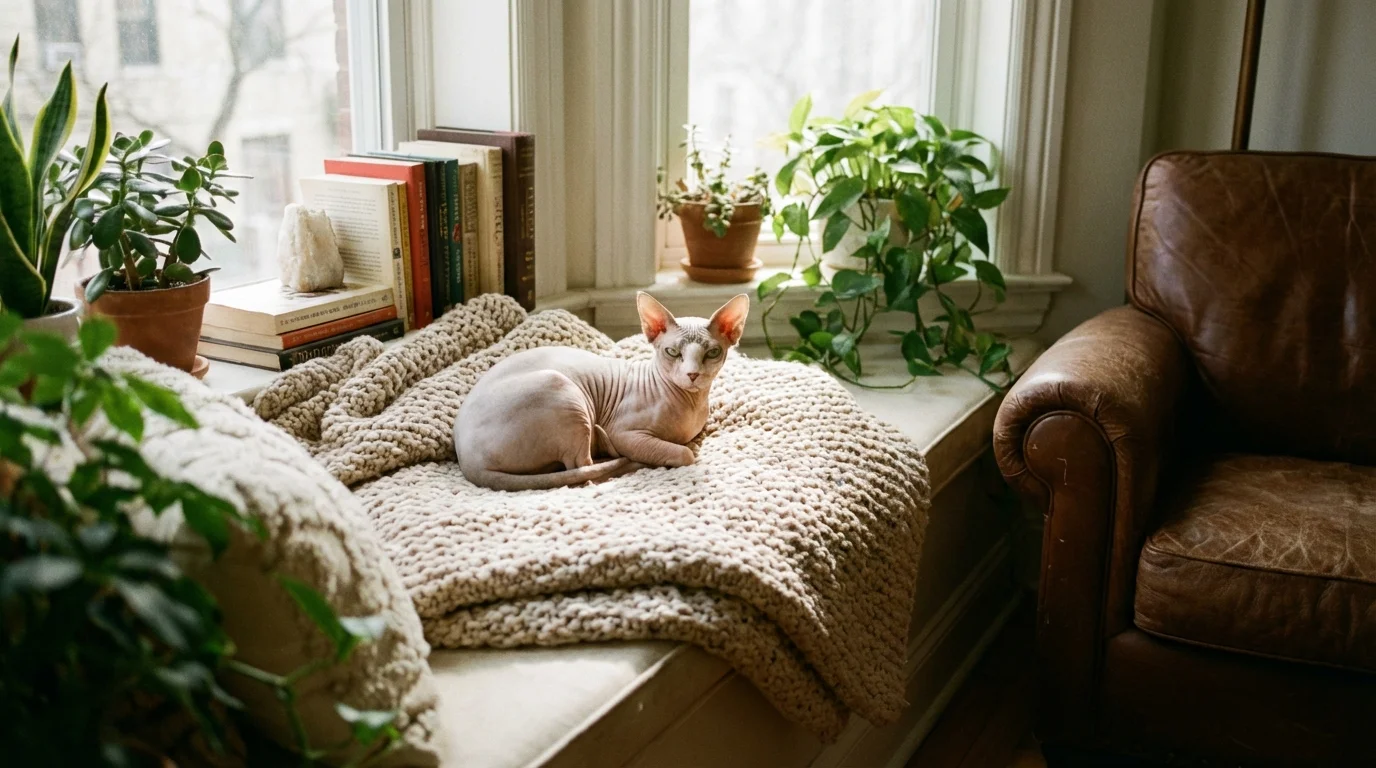
The Sphynx is, without exaggeration, one of the most affectionate cat breeds in existence. These cats want to be touching you at all times. They will sleep under the covers pressed against your body, sit on your lap during every meal, drape themselves across your shoulders while you walk around the house, and wedge themselves between you and your keyboard while you work. This is not occasional behavior. This is their default state.
Part of this is temperament and part is thermoregulation. Sphynx cats run warmer than furred cats (their body temperature is the same, but without insulation they lose heat faster and seek external warmth). Your body is the best heat source in the house. But the affection goes far beyond warmth-seeking. Sphynx cats are genuinely bonded to their people in a way that surprises people who expect cats to be independent. They greet you at the door, follow you from room to room, and will literally climb into your clothing if you let them.
The breed is extroverted with strangers. Most Sphynx will approach visitors, inspect them, and settle into their laps with zero hesitation. This makes them poor guard cats but excellent therapy animals and social companions. They do not hide when company arrives.
Sphynx cats are playful and energetic throughout their lives. They are clownish, performing acrobatic leaps and silly poses that appear intentional. Many Sphynx owners swear their cats have a sense of humor. They enjoy fetch, chase games, and wrestling with other cats. They are intelligent and will learn tricks, open doors, and figure out puzzle feeders.
The breed does not do well alone. A Sphynx left by itself for 8 to 10 hours daily will develop behavioral problems: over-grooming (which on a hairless cat means skin irritation), excessive vocalization, depression, and destructive behavior. If you work full time, a companion animal is necessary. Another Sphynx is ideal because they will sleep together for warmth and keep each other entertained. A dog or another friendly cat breed also works.
With children, Sphynx cats are patient and playful. Their sturdiness and tolerance make them good family cats. They handle being carried and held better than most breeds because they enjoy the physical contact.
Enrichment & Training

Sphynx cats are intelligent and respond well to training, partly because they are food-motivated and partly because they enjoy interacting with their owners. Clicker training works well. Many Sphynx learn to sit, shake, come when called, high-five, and fetch. Some learn to open cabinet doors and dresser drawers, which is less charming when they start redistributing your belongings.
Exercise needs are moderate to high. Sphynx cats are active and playful, needing 30 to 45 minutes of interactive play daily. Feather wands, ball tracks, and laser pointers are all popular. The breed enjoys climbing, and a tall cat tree is essential. Many Sphynx are drawn to puzzle feeders and interactive toys that challenge them mentally.
Because Sphynx have no coat protection, some outdoor enrichment considerations differ from furred cats. They sunburn easily, so direct sunlight through windows should be monitored during summer. A catio provides safe outdoor access, but the enclosure needs a shaded area. In cold weather, Sphynx should not be outside at all, as they lose body heat rapidly.
Clothing is a practical consideration for many Sphynx owners. The breed often wears sweaters and shirts, not as a fashion statement but for warmth. Many Sphynx enjoy wearing clothes because the fabric provides warmth against their skin. Introduce clothing gradually during kittenhood for best acceptance. In cold homes, a heated cat bed is another option the breed appreciates.
Socialization is easy with Sphynx because the breed is naturally outgoing. Exposing kittens to various people, sounds, and environments during their first 12 weeks produces an even more confident adult. Most Sphynx are already bold enough to handle new situations well, but early socialization prevents the rare shy Sphynx from becoming fearful.
Mental stimulation matters as much as physical exercise. Rotating toys, food puzzles, and novel objects to investigate keep the Sphynx engaged. The breed gets bored with the same toys quickly, so cycle them in and out on a weekly basis.
Health & Care
Sphynx cats live 8 to 14 years, with most reaching 12 to 14 years with proper care. The breed has several health concerns that prospective owners should understand, along with unique grooming needs that come with having no coat.
Hypertrophic cardiomyopathy (HCM) is the most serious health concern. The Sphynx has one of the highest rates of HCM among cat breeds. HCM causes the heart muscle to thicken, reducing the heart's ability to pump blood effectively. It can appear at any age and may cause sudden death in apparently healthy cats. Responsible breeders screen all breeding cats with annual echocardiograms performed by a veterinary cardiologist. Ask your breeder for documentation. Annual cardiac screening is recommended for all Sphynx throughout their lives, even pet-quality cats.
Skin conditions are common because the breed lacks the protective coat that shields other cats' skin. Without fur to absorb skin oils, Sphynx cats accumulate a greasy, waxy buildup on their skin that requires regular bathing. Most Sphynx need a bath every 1 to 2 weeks using a gentle, fragrance-free cat shampoo or baby wipes between baths. Overbathing can strip the skin and cause the body to produce even more oil, so finding the right frequency for your individual cat takes some experimentation.
Ear wax production is heavy because there is no ear hair to trap debris. Clean the ears weekly with a veterinarian-approved ear cleaner. Dark brown wax accumulates quickly and can lead to infections if ignored. Similarly, the nail beds collect a dark waxy substance that should be cleaned during nail trims.
Urticaria pigmentosa, a skin condition causing crusty, itchy sores, occurs at higher rates in Sphynx than in other breeds. It is manageable with medication but can be chronic. Sunburn is a risk from window exposure, and light-colored Sphynx are particularly susceptible. UV-filtering window film can help.
Respiratory infections can be more troublesome in Sphynx because they lack the nasal hair that helps filter inhaled particles. Keep the living environment clean and dust-free. Some Sphynx are sensitive to cigarette smoke, strong cleaning products, and scented litter.
Dental disease affects the breed at rates comparable to other cats. Maintain regular dental care: brush teeth several times weekly and schedule professional cleanings as recommended.
Living With a Sphynx
Sphynx cats are strictly indoor cats. Their lack of coat makes them vulnerable to sunburn, cold, rain, and injury from rough surfaces. They cannot regulate their body temperature as effectively as furred cats, so they need a warm home. Most Sphynx owners keep their homes at 68 to 72 degrees Fahrenheit. Heated beds, blankets, and clothing supplement warmth in cooler environments.
The breed is a magnet for attention. Guests, delivery people, and anyone who enters your home will notice and comment on the Sphynx. Most reactions range from fascinated to delighted, though some people are initially uncomfortable with the hairless appearance. The cats themselves are oblivious to these reactions and will approach anyone for warmth and affection.
Sphynx leave marks. Without fur to absorb skin oils, they leave oily spots on bedding, clothing, and light-colored furniture. Most owners cover furniture with washable throws and wash bedding more frequently. Dark-colored bedding shows less staining. This is the daily reality of living with a hairless cat, and it is worth mentioning because it surprises some new owners.
The breed is not hypoallergenic despite the common misconception. Cat allergies are primarily triggered by the Fel d 1 protein in saliva and skin secretions, not by fur. Sphynx produce the same allergens as furred cats. Some people with mild allergies find they react less to Sphynx because there is no fur to trap and disperse the protein, but this is not guaranteed. Spend time with a Sphynx before committing if allergies are a concern.
Multiple Sphynx households are common. The breed does so well in pairs that many breeders recommend adopting two. Two Sphynx will sleep together (sharing body heat), play together, groom each other, and keep each other company during the day. The marginal increase in work with two cats versus one is small, and the reduction in separation anxiety is significant.
The financial commitment for a Sphynx is higher than average. Veterinary costs include annual cardiac screening ($200 to $400 per echocardiogram), skin care products, and potentially more frequent vet visits for skin and ear issues. Grooming supplies (gentle shampoo, ear cleaner, wipes) are ongoing expenses. Clothing and heated beds add cost. Pet insurance is a wise investment given the breed's predisposition to HCM.
Cutest Sphynxs on Pupvote
 #1
#1Jinx loves hanging out with his bestie Spyro and snuggling under all of his warm blankets and beds.
2.2K+ votes #2
#2Kreacher’s middle name is trouble because he’s always finding new things to get into around the house. He loves being on shoulders and cuddling under the blankets.
670 votes #3
#3Playful little baby 🧶
15 votes #4
#4Lulu...pronounced Yefinsh is Latvian for Little sidekick...my father named her that because she reminds her of Don Knotts...and that is exactly her personality...Lulu....plus her tail is large like a squirrel or raccoon...she's SO special! I hope you think so too...
14 votesTop Sphynx Names on Pupvote
More Sphynxs on Pupvote
Frequently Asked Questions
Sphynx cats make excellent family pets for households that can provide warmth, attention, and companionship. They are affectionate, patient with children, and get along well with other pets. Their main requirement is company. Sphynx do not handle being left alone for long hours and do best in homes where someone is present most of the day or where they have a companion animal.
Yes, despite being hairless. Sphynx cats need weekly bathing to remove skin oil buildup, weekly ear cleaning to manage heavy wax production, and regular nail bed cleaning. They also need sunscreen protection from window light and clothing or heated beds for warmth. The grooming is different from furred cats but takes more time and attention than most people expect.
No. Sphynx cats are not hypoallergenic. Cat allergies are caused by the Fel d 1 protein in saliva and skin secretions, not fur. Sphynx produce the same allergens as furred cats. Some allergy sufferers react less because there is no fur to spread allergens around the home, but this varies by individual. Spend time with a Sphynx before adopting if you have cat allergies.
Sphynx cats live 8 to 14 years, with most reaching 12 to 14 years. Hypertrophic cardiomyopathy (HCM) is the breed's most serious health risk and the leading cause of premature death. Annual cardiac screening by a veterinary cardiologist is recommended for all Sphynx. Buying from a breeder who screens for HCM and maintains genetic diversity improves your cat's chances.
Yes. Without a fur coat, Sphynx cats lose body heat faster than furred cats and seek warmth constantly. Keep your home at 68 to 72 degrees Fahrenheit. Most Sphynx benefit from sweaters, heated beds, and blankets. They will sleep under your covers and sit on your lap for warmth. In cold weather, never let a Sphynx outdoors without protection.
Sphynx kittens from reputable breeders cost $1,500 to $3,500. Show-quality cats from health-tested lines may reach $4,500. Breeders must provide annual HCM screening echocardiograms for both parents. Adopting from a breed rescue costs $300 to $600. Budget higher than average for ongoing care: annual cardiac screening, bathing supplies, ear care products, clothing, and heated beds.