


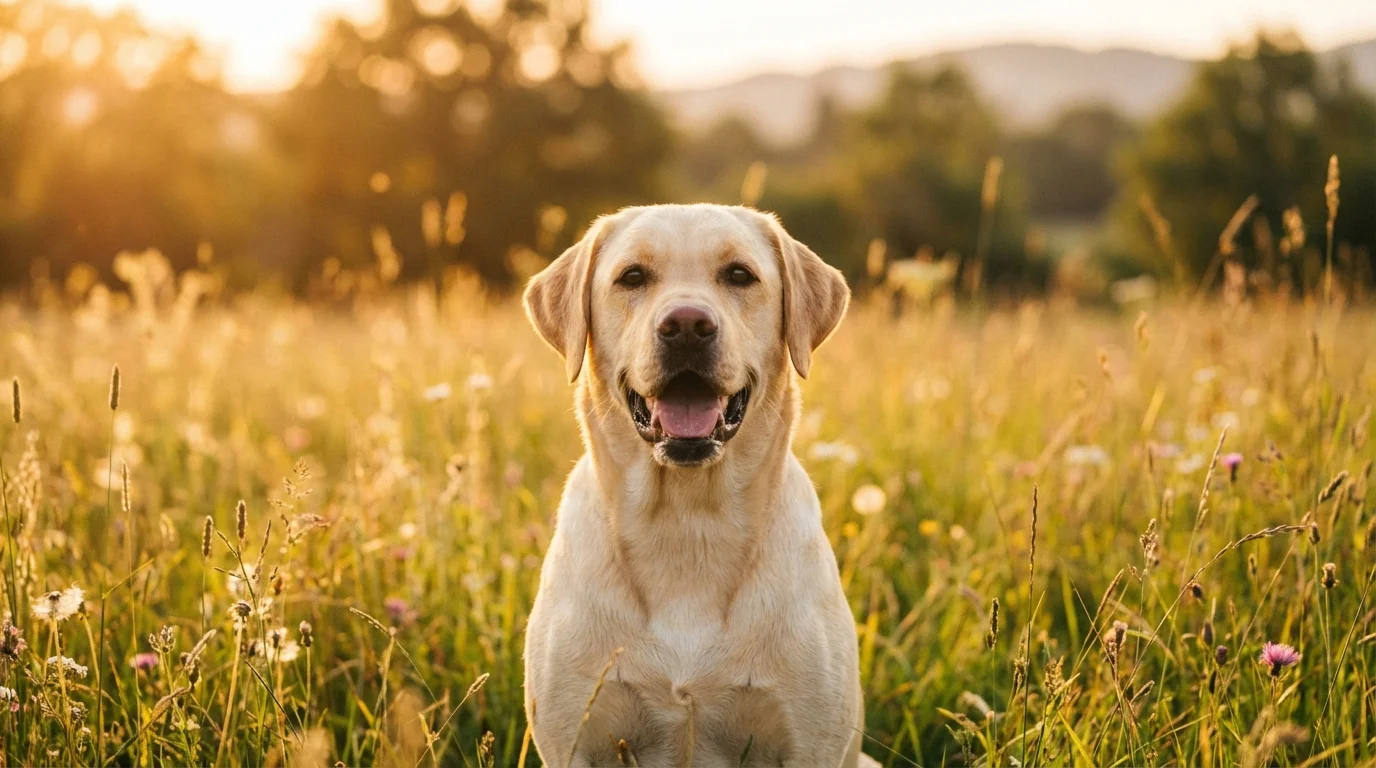
The Labrador Retriever held the number one spot on the AKC's most popular breeds list for 31 consecutive years. Labs earn that loyalty with a combination of steady temperament, high trainability, and genuine enthusiasm for anything involving their people. Whether retrieving ducks, guiding the visually impaired, or simply playing fetch in the backyard, this breed throws itself into every task with the same whole-hearted energy.
Breed Characteristics
History & Origin

The Labrador Retriever traces its roots to the island of Newfoundland off Canada's Atlantic coast, where it was originally known as the St. John's water dog or Lesser Newfoundland. Starting in the early 1500s, these dogs worked alongside fishermen hauling nets, retrieving escaped fish, and swimming lines between boats. The icy North Atlantic waters shaped the breed's defining physical traits: a dense, water-shedding double coat, a thick "otter tail" that works as a rudder, and webbed feet built for strong swimming.
British sportsmen visiting Newfoundland in the early 1800s recognized the dogs' natural retrieving instincts and began importing them to England. The 2nd Earl of Malmesbury was among the first to acquire St. John's dogs for wildfowl hunting on his estate, and it was the 3rd Earl who gave the breed its modern name. In a letter from 1887, he wrote that he "always called mine Labrador dogs," borrowing the name from the nearby Labrador Sea. The 5th Duke of Buccleuch and the 3rd Earl of Malmesbury collaborated to establish breeding programs that formed the foundation of the modern Labrador.
By the 1880s, the original St. John's water dog was nearly extinct in Newfoundland, driven out by a combination of tax laws on dog ownership and a British quarantine act that restricted imports. The breed survived entirely through the English breeding programs. The Kennel Club in England recognized the Labrador Retriever as a distinct breed in 1903, and the AKC followed in 1917. Early Labs were almost exclusively black; yellow and chocolate colors appeared sporadically and were not widely accepted until the mid-20th century.
The breed's popularity in the United States grew slowly through the 1920s and 1930s, primarily among hunters and field trial enthusiasts. After World War II, Labs started entering family homes in larger numbers. By 1991, the Labrador Retriever reached the top of the AKC registration rankings, a position it held until 2022 when the French Bulldog overtook it. Even at number two, Labs remain one of the most registered breeds in the world.
The Labrador Retriever held the number one spot on the AKC's most popular breeds list for 31 consecutive years (1991 to 2022), the longest reign of any breed in the organization's history.
Appearance
The Labrador Retriever is a medium-to-large, strongly built dog with a balanced, athletic frame. Males stand 22.5 to 24.5 inches at the shoulder and weigh 65 to 80 pounds. Females are slightly smaller at 21.5 to 23.5 inches and 55 to 70 pounds. The overall impression should be one of a dog built for function: muscular without being heavy, compact without being squat.
The head is broad and clean-cut with a moderate stop. The skull and foreface are roughly equal in length. The eyes are medium-sized, set well apart, and express a kind, friendly temperament. Eye color should be brown in black and yellow Labs and brown or hazel in chocolates. The ears hang close to the head, set slightly above eye level, and are not large or heavy. The jaw is strong enough to carry game birds gently without crushing them, a trait breeders call a "soft mouth."
The breed's most distinctive physical feature is the otter tail: thick at the base, tapering toward the tip, and covered with the same dense, short coat that covers the body. The tail extends roughly to the hock and should never curl over the back. It serves as a powerful rudder in the water and wags almost constantly on land.
Labradors come in three recognized colors: black, yellow, and chocolate. Yellow ranges from a pale cream (sometimes called "white") to a deep fox red. Chocolate spans light silvery-brown to a rich dark brown. A small white spot on the chest is permissible. The "silver Lab" is a diluted chocolate and remains controversial, with the AKC registering them as chocolate.
The double coat is the breed's armor against cold water. The outer coat is short, straight, and dense. The undercoat is soft, weather-resistant, and traps a layer of insulating air next to the skin. This coat sheds water almost immediately after the dog exits a lake or pond. It also sheds heavily on your furniture, your clothes, and your car, particularly during the spring and fall coat-blow seasons.
There is a visible difference between field (American) and show (English) type Labradors, though the AKC standard does not officially distinguish them. Field-bred Labs tend to be taller, leaner, and more angular with a narrower head. Show-bred Labs are stockier, broader in the skull, and heavier through the chest and body. Both types are purebred Labradors; the difference reflects generations of breeding for different purposes.
Temperament & Personality

The Labrador's temperament is the single biggest reason the breed has remained so popular for so long. Labs are genuinely friendly, going well beyond mere tolerance. They are actively happy to meet new people, new dogs, and new situations. This is a breed that wags its entire body when greeting visitors, not out of nervousness, but pure excitement.
Labs are eager to please, which makes them responsive partners in training and daily life. They watch their owners closely, pick up on routines fast, and generally want to do whatever you ask of them. This biddable nature is why they dominate working roles: guide dogs, search and rescue, detection work, and therapy programs. Roughly 70% of guide dogs in North America are Labrador Retrievers or Labrador crosses.
With children, Labs are patient and tolerant to a degree that surprises many first-time owners. They handle the noise, unpredictability, and grabby hands of small children better than most breeds. That said, young Labs are boisterous. A 60-pound adolescent Lab can easily knock over a toddler while playing, so supervision matters during the first couple of years. Labs mature slowly, often not settling into their adult temperament until age 2 or 3.
The breed's social nature has a flip side. Labs do not enjoy being alone. Left without companionship for long stretches, they will find ways to entertain themselves, and those ways usually involve chewing, digging, or counter-surfing. Labs are mouthy dogs by design (they were bred to carry things), and young Labs will chew on anything within reach if bored or anxious.
Aggression is rare in well-bred, well-socialized Labradors. The breed standard specifically calls for a "kindly" nature, and reputable breeders screen for temperament as carefully as they screen for physical traits. Resource guarding can occur, particularly around food, but this is manageable with early training. Labs that show unprovoked aggression are atypical and usually indicate poor breeding or insufficient socialization.
One personality quirk worth mentioning: Labs are food-driven to an almost comical degree. A 2016 study published in Cell Metabolism identified a mutation in the POMC gene that affects appetite regulation in Labradors. About 25% of Labs carry this variant, which makes them feel perpetually hungry. This trait makes them highly trainable with food rewards, but it also makes them prone to obesity if owners are not careful about portion control.
Approximately 70% of guide dogs in North America are Labrador Retrievers or Labrador crosses, making them the most widely used breed in assistance dog programs worldwide.
Training & Exercise

Labrador Retrievers are among the easiest breeds to train. They rank in the top 10 for working intelligence according to canine psychologist Stanley Coren's research, meaning most Labs learn a new command within 5 repetitions and obey known commands at least 95% of the time. Their food motivation, desire to please, and high energy make training sessions productive and, for the most part, enjoyable.
Positive reinforcement works best with Labs. They respond well to food rewards, praise, and play. Harsh corrections tend to shut them down rather than motivate them. Keep training sessions varied and purposeful. Labs get bored with repetition and will start improvising if the same drill runs too long. Five to fifteen minute sessions spread throughout the day produce better results than one long training block.
Puppy socialization is straightforward with this breed because Labs tend to approach new things with curiosity rather than fear. Expose them to a wide range of people, dogs, sounds, and environments between 8 and 16 weeks of age. Puppy classes are valuable for structured socialization, and Labs typically become the class favorites.
Leash manners deserve early attention. An untrained adult Lab pulling on leash is a genuine physical challenge, especially for smaller handlers. Teach loose-leash walking from the start, and be consistent about it. The same goes for jumping up on people. What seems cute in a 10-pound puppy becomes a real problem when that puppy is 70 pounds and greeting your elderly neighbor.
Exercise requirements are substantial. Adult Labs need a minimum of 60 to 90 minutes of physical activity daily. This can include walks, runs, swimming, fetch, or off-leash play in a secure area. Swimming is ideal for Labs because it provides a full-body workout without the joint impact of running, and most Labs take to water instinctively. Many will walk into any body of water they encounter, so keep that in mind near unfenced ponds.
Mental stimulation matters as much as physical exercise. Labs that get plenty of walks but no mental challenge will still find ways to be destructive. Puzzle feeders, training games, nose work, and retrieval exercises give their brains something to work on. If you are not a hunter, consider dock diving, agility, obedience trials, or scent work as structured outlets for their energy and intelligence.
Field-bred Labs typically have higher exercise needs than show-bred Labs. A field-line Lab may need closer to 2 hours of vigorous activity per day, while a stockier show-line Lab may settle with an hour of moderate exercise. Know which type you are getting before committing.
Health & Care
Labrador Retrievers are generally healthy dogs with an expected lifespan of 10 to 12 years per the AKC. A 2024 study from the Royal Veterinary College found that the median lifespan for Labs in the UK was 13.1 years, making them one of the longer-lived medium-to-large breeds. Chocolate Labs had a slightly shorter median lifespan (11.2 years) compared to black and yellow Labs, which researchers attributed to a smaller gene pool and higher rates of skin and ear conditions.
Hip and elbow dysplasia are the breed's most well-known orthopedic concerns. Both conditions involve abnormal joint development and can range from mild stiffness to severe lameness. The Orthopedic Foundation for Animals (OFA) reports that roughly 12% of Labs evaluated show some degree of hip dysplasia. Responsible breeders screen both parents via OFA or PennHIP evaluations before breeding.
Exercise-induced collapse (EIC) is a genetic condition specific to Labradors and a few related breeds. Affected dogs experience muscle weakness and collapse after 5 to 20 minutes of intense exercise. The episodes look alarming but are usually not life-threatening, and dogs recover within 15 to 30 minutes. A DNA test identifies carriers, and responsible breeders test for EIC before producing litters.
Progressive retinal atrophy (PRA) causes gradual vision loss and eventual blindness. A DNA test for the prcd-PRA variant specific to Labs is available and should be part of any breeding program's health testing protocol. Other eye conditions to screen for include cataracts and retinal dysplasia. The Canine Health Information Center (CHIC) recommends that all breeding Labs have a current ophthalmologist evaluation.
Obesity is the most common and most preventable health issue in the breed. The POMC gene mutation discussed earlier means many Labs feel hungry even after a full meal, and owners often respond by overfeeding. A 2018 study in the Journal of Veterinary Internal Medicine found that over 50% of Labradors in the US were overweight or obese. Excess weight worsens joint problems, shortens lifespan, and increases the risk of diabetes. Feed measured meals (not free-choice), limit treats to 10% of daily calories, and use your hands to check rib coverage regularly. You should be able to feel the ribs easily without pressing hard.
Grooming is simple but consistent. Brush the coat 2 to 3 times per week with a slicker brush or rubber curry to manage loose hair and distribute skin oils. During the spring and fall shedding seasons, daily brushing is needed to keep the hair tumbleweeds under control. Baths every 6 to 8 weeks are usually sufficient unless the dog has been swimming in lakes or rolling in something unpleasant. Check and clean ears weekly, especially after swimming, because the drop ear shape traps moisture and promotes yeast and bacterial infections. Trim nails every 2 to 3 weeks.
Living With a Labrador Retriever
Living with a Lab means accepting that your house will contain dog hair. It will be on your couch, in your car, woven into your dress clothes, and floating in your coffee. Two seasonal coat blows per year make it worse, but Labs shed moderately year-round. If pristine furniture is a priority, this is not the breed for you. A good vacuum and lint rollers in every room are standard equipment for Lab owners.
Labs thrive in homes where they are part of the family. They want to be in the same room as their people, and ideally on the same piece of furniture. A Lab left in the backyard while the family is inside will not be happy and will let you know by barking, digging, or finding a way through the fence. This is an indoor dog that needs outdoor exercise, not an outdoor dog.
Space requirements are moderate. Labs do well in suburban homes with fenced yards, but they can also adapt to apartment living if their exercise needs are met consistently. A yard is convenient but not a substitute for structured walks and playtime. A Lab with a big yard and no human interaction will still be bored and destructive.
The breed's love of water deserves its own planning. Many Labs will enter any pool, pond, lake, or muddy puddle they encounter. If you have a backyard pool, expect the dog to use it. Pool covers should be sturdy enough to support the dog's weight if they walk onto them. Rinse the dog after pool swims to remove chlorine, and after lake swims to prevent hot spots and ear infections.
Labs are social dogs that typically get along well with other pets. They coexist comfortably with cats (especially if raised together), other dogs, and even smaller animals if properly introduced. Their gentle mouth and low prey drive compared to other sporting breeds make them more reliable around small animals than many similarly sized dogs.
The financial commitment is worth noting. Beyond the purchase price, Labs are medium-maintenance dogs in terms of ongoing costs. Budget for high-quality food (Labs eat more than small breeds, typically 2 to 3 cups per day for adults), annual vet checkups, flea and tick prevention, and potential costs for joint supplements or treatment as they age. Pet insurance is worth considering, particularly coverage for orthopedic conditions.
Labs age gracefully but do slow down. Most Labs remain active and playful well into their senior years, with the first signs of age typically appearing around 8 or 9. Shorter walks, orthopedic bedding, joint supplements containing glucosamine and omega-3 fatty acids, and ramps for getting into cars help keep older Labs comfortable. Their appetite rarely decreases with age, so watch the weight closely as activity levels drop.
Cutest Labrador Retrievers on Pupvote
 #1
#1Joker is a 2.5 year old black Labrador. He loves playing keep away with his brothers and swimming. He is my largest lap dog, weighing in around 100#.
3.8K+ votes #2
#2Fine Leo 🐶 Med sitt store hjerte og en personlighet som er umulig å ikke elske, sprer han glede hvor enn han går. Med sitt gode humør, trofaste vesen og herlige labrador-sjarm gjør han dagene litt bedre for alle rundt seg🐾
3.8K+ votes #3
#3Luna is a joyful, food-loving pup who lives for belly rubs, tasty treats, and making everyone smile! Please vote for Luna! 🐾❤️
3.6K+ votes #4
#4Hello les labrapotes ! Moi c’est Rebelle ! Je fais plein de bêtises mais c’est mon prénom qui veut ça💕🐶
2.9K+ votesTop Labrador Retriever Names on Pupvote
More Labrador Retrievers on Pupvote
Frequently Asked Questions
Labrador Retrievers are consistently rated among the best family dog breeds. They are patient with children, eager to participate in family activities, and social enough to welcome visitors without aggression. Labs bond with every family member rather than fixating on one person. The main consideration for families with very young children is that adolescent Labs (under age 2) are boisterous and may accidentally knock over toddlers during play.
Plan on at least an hour of daily activity for an adult Lab, and closer to 2 hours if you have a field-bred line. Swimming is the best single exercise for the breed because it spares their joints while tiring them out thoroughly. A tired Lab is a well-behaved Lab. If your Lab is chewing furniture, digging holes, or barking excessively, insufficient exercise is the most likely cause.
Labs shed moderately year-round and heavily twice a year during seasonal coat changes in spring and fall. Their dense double coat releases loose hair constantly, and during shedding season, daily brushing is needed to manage it. Regular grooming (2 to 3 times per week outside shedding season) reduces the amount of hair on furniture and clothing. Labs are not a good choice for anyone who wants a low-shedding dog.
The AKC lists the Labrador Retriever's lifespan at 10 to 12 years, though recent veterinary data from the Royal Veterinary College suggests many Labs reach 13. Chocolate Labs tend to have shorter lifespans than black or yellow Labs, likely due to a smaller gene pool. Keeping your Lab at a healthy weight is the single most impactful thing you can do to extend its life, since obesity is linked to a 2-year reduction in lifespan for the breed.
The most common health concerns in Labs are hip and elbow dysplasia, exercise-induced collapse (EIC), progressive retinal atrophy (PRA), and obesity. About 12% of Labs evaluated by the OFA show some degree of hip dysplasia. DNA tests exist for EIC and PRA, and responsible breeders screen for both. Obesity affects over half of US Labs and worsens joint problems, diabetes risk, and overall lifespan. Ear infections are also common due to the breed's drop ear shape.
Labrador Retriever puppies from health-tested, reputable breeders typically cost $1,200 to $3,000. Field-trial lines and dogs from titled parents may run higher. Rescue Labs are available through breed-specific rescues for $200 to $500. Beyond the purchase price, first-year costs including vaccinations, spay or neuter, supplies, and food average $2,000 to $3,000. Annual costs after the first year run roughly $1,500 to $2,000 for food, vet care, and preventive medications.