


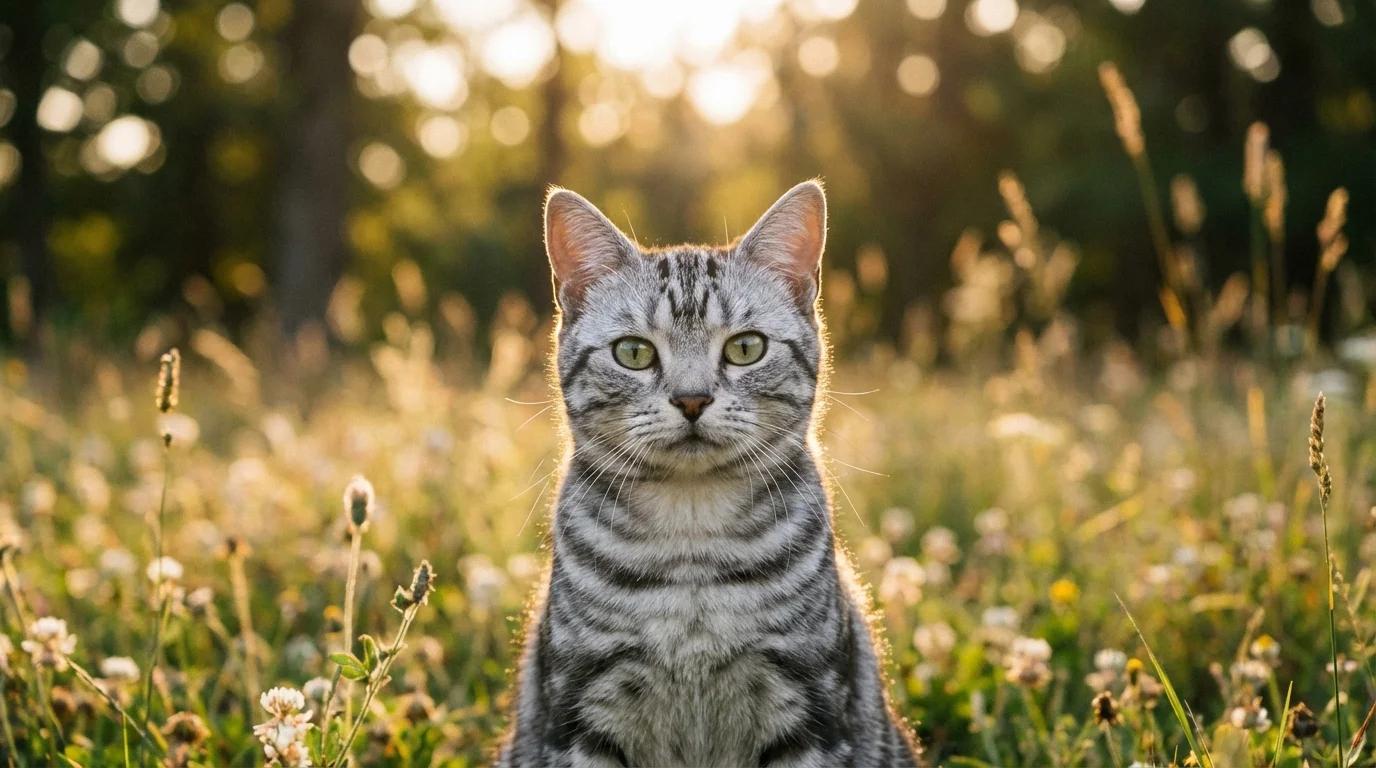
The American Shorthair is the quiet workhorse of the cat world. Descended from cats that sailed to North America on European trading ships, the breed spent centuries earning its keep as a mouser before settling into its current role as one of the most popular family cats in the country. American Shorthairs are healthy, even-tempered, and adaptable enough to fit into almost any household. They are not flashy or demanding. They are just reliably, consistently good cats.
Breed Characteristics
History & Origin

Cats arrived in North America on European ships, brought aboard to protect cargo and food stores from rats and mice. These working cats spread across the colonies and eventually the entire continent, adapting to the climate and earning their keep on farms, in warehouses, and in homes. For centuries, they were just "cats" with no breed designation. Nobody kept pedigrees for a barn mouser.
The move toward formal breeding began in the early 1900s. Cat fanciers in the United States noticed that uncontrolled breeding with imported longhaired and exotic breeds was diluting the qualities that made American domestic cats distinct: their sturdy build, dense coat, and excellent health. A group of breeders began selectively breeding the best examples of these domestic shorthaired cats to preserve and refine the type.
The breed was initially registered as the "Domestic Shorthair" by CFA in 1906, making it one of the first five breeds recognized by the registry. The name was a problem. "Domestic Shorthair" sounded generic and did not distinguish carefully bred cats from random-bred housecats. In 1966, the breed was renamed the "American Shorthair" to highlight its heritage and differentiate it from non-pedigreed domestic cats.
The silver classic tabby became the breed's most famous color pattern after a silver tabby named Shawnee Doubletime won CFA's Cat of the Year in 1965. That single cat did more for the breed's popularity than decades of show ring appearances. The silver tabby pattern, with its dense black markings on a bright silver background, became so closely associated with the breed that many people assume all American Shorthairs are silver tabbies. They are not. The breed comes in over 80 color and pattern combinations.
Today the American Shorthair consistently ranks in the top 10 most popular CFA breeds. It is valued for exactly the qualities those early breeders wanted to preserve: robust health, balanced temperament, and a sturdy, attractive appearance that ages well.
The American Shorthair was originally registered as the "Domestic Shorthair" in 1906. The name was changed in 1966 because "Domestic Shorthair" failed to distinguish pedigreed cats from the millions of random-bred housecats across the country.
Appearance
The American Shorthair is a medium to large cat with a powerful, well-built body. Males typically weigh 11 to 15 pounds, females 8 to 12 pounds. The breed standard emphasizes balance and proportion: nothing should be exaggerated. The body is slightly longer than it is tall, with a broad chest, strong shoulders, and well-developed muscles. These cats look like they could still catch mice for a living, which many of them can.
The head is large and round with full cheeks, particularly in mature males. The muzzle is squarish with a firm chin. The eyes are large, round, and wide-set, giving the face an open, alert expression. Eye color corresponds to coat color: gold is most common, but green, hazel, blue, and copper also occur. The ears are medium-sized with slightly rounded tips, set well apart.
The coat is the breed's most practical feature. It is short, thick, dense, and hard in texture, with a substantial undercoat. This is not a silky or fine coat. It was developed over centuries for weather resistance, and it still serves that purpose. The texture is almost plush, like a good wool blanket. It lies flat against the body and requires minimal grooming.
Over 80 color and pattern combinations are recognized, including solid, tabby, bicolor, tortoiseshell, calico, smoke, and shaded varieties. The silver classic tabby is the most iconic: bright silver base with dense, swirling black tabby markings. Brown tabby, red tabby, and blue are also common. Almost every color and pattern you can find in a domestic cat exists in the American Shorthair pedigree.
The legs are medium length, heavily boned, and muscular. The paws are round and firm. The tail is medium length, thick at the base, tapering to a blunt tip. The overall impression is of a solid, well-proportioned cat that is built for function rather than fashion.
Temperament & Personality
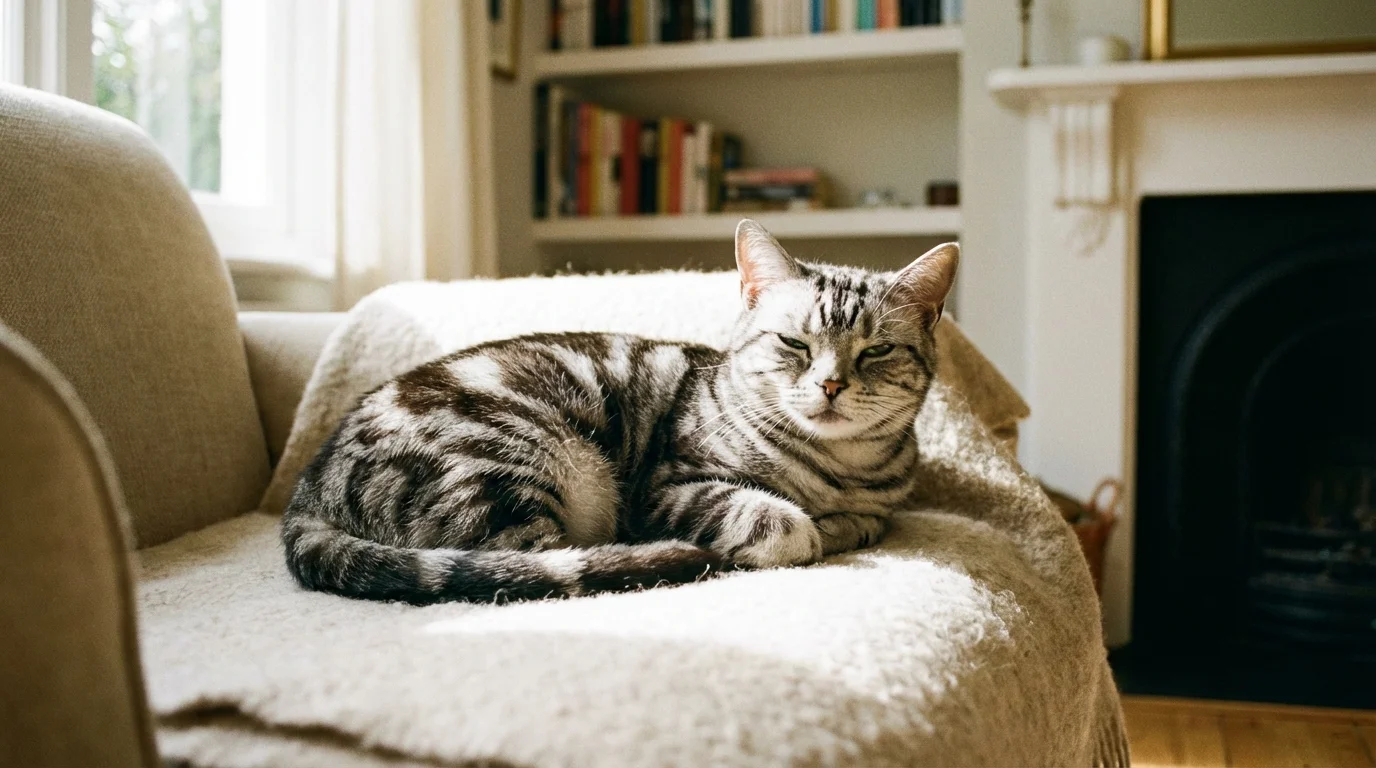
The American Shorthair's temperament is best described as moderate. These cats are not hyperactive like Abyssinians, but they are not as sedentary as Persians. They are affectionate without being clingy, playful without being destructive, and social without demanding constant attention. This balance is the breed's greatest strength and the main reason it works in so many different households.
American Shorthairs enjoy being around their people but do not need to be in your lap at all times. They will sit near you on the couch, follow you to the kitchen, and greet you at the door, but they are equally content to entertain themselves while you are busy. This independence makes them one of the better breeds for people who work during the day. They handle alone time without the anxiety that some more dependent breeds develop.
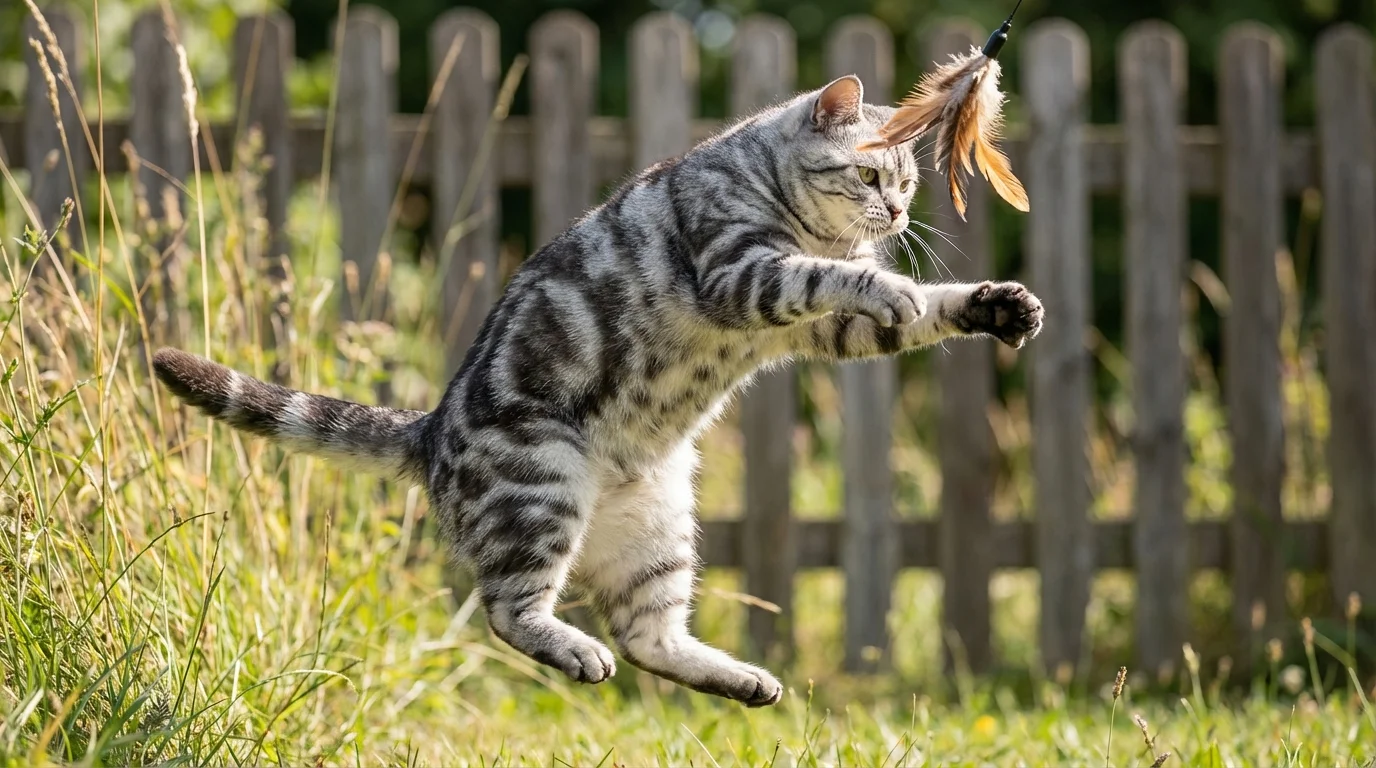
The breed retains its hunting instincts. American Shorthairs are excellent mousers, and many will stalk and catch insects, toy mice, and anything else that moves in an interesting way. Interactive play sessions that mimic hunting, like feather wands and ball tracks, engage this prey drive and provide exercise. Some American Shorthairs will play fetch, though they tend to set their own schedule for when fetch is an acceptable activity.
With children, American Shorthairs are patient and tolerant. Their sturdy build means they are not fragile, and their even temper means they handle the unpredictability of young children well. They will generally walk away from a situation that bothers them rather than scratch or bite. This makes them one of the safest cat breeds for families with toddlers.
They get along well with other cats and with cat-friendly dogs. They are not territorial in the way some breeds can be, and they adapt to new household members with minimal drama. Introducing a new pet to an American Shorthair is usually straightforward if done gradually.
The breed is quiet. American Shorthairs are not big talkers. They will meow to let you know the food bowl is empty or the door needs opening, but they do not carry on extended conversations or yowl for attention. For people who find vocal cats annoying, this is a significant advantage.
Enrichment & Training
American Shorthairs are moderately trainable. They are intelligent enough to learn tricks and routines, but they are not as driven to perform as more active breeds like Abyssinians or Siamese. They will learn what benefits them, like coming when called for dinner, and they may indulge you in a few tricks if treats are involved. Do not expect them to work as hard for your approval as a dog would.
Exercise needs are moderate. Adult American Shorthairs benefit from 20 to 30 minutes of interactive play daily. Feather wands, laser pointers (ending with a catchable toy), and ball tracks are good options. The breed's hunting instinct means they respond well to toys that move erratically. Many enjoy batting at crinkle balls and chasing toy mice across hard floors.
The breed has a tendency toward weight gain, and this is the single most important health management issue for American Shorthair owners. Their moderate energy level combined with a hearty appetite means they will eat more than they burn if food is freely available. Free-feeding is not recommended. Measured meals, twice daily, keep weight under control. Puzzle feeders serve double duty: they slow eating and provide mental stimulation.
Cat trees and scratching posts are standard enrichment. American Shorthairs do not climb as obsessively as Abyssinians, but they appreciate a mid-height perch near a window where they can watch birds and outdoor activity. A window perch or shelf is one of the best investments for this breed.
Leash training is possible but less common than with more active breeds. Some American Shorthairs take to a harness and enjoy supervised outdoor time. Others have no interest. If your cat shows curiosity about the outdoors, introducing a harness gradually may work. A catio (enclosed outdoor space) is a lower-effort alternative that many American Shorthairs enjoy.
Socialization during kittenhood is valuable but less critical than with more nervous breeds. American Shorthairs are naturally adaptable, and most handle new people, environments, and situations without much stress. Exposing kittens to varied experiences during their first 12 weeks still produces a more confident adult cat.
Health & Care
American Shorthairs are one of the healthiest cat breeds, with a lifespan of 15 to 20 years. Many reach 17 to 18 years, and some exceed 20. This longevity reflects centuries of natural selection for robust health. The breed has fewer genetic health problems than most pedigreed cats.
Hypertrophic cardiomyopathy (HCM), a thickening of the heart muscle, is the most significant genetic concern. It occurs in all cat breeds but appears at slightly elevated rates in American Shorthairs. Responsible breeders screen breeding cats with echocardiograms. HCM can appear at any age, and annual veterinary checkups that include listening for heart murmurs are important.
Obesity is the breed's most common health issue in practice, and it is entirely preventable. American Shorthairs love to eat and are not self-regulating with food. Overweight cats face higher risks of diabetes, joint problems, and urinary tract issues. Keep your cat at a healthy weight through measured meals, limited treats, and daily play. Your veterinarian can help determine the ideal weight for your individual cat.
Dental disease affects American Shorthairs at typical rates for cats. Regular dental care, including brushing several times per week and professional cleanings as needed, prevents gum disease and tooth loss. Starting dental care young makes it easier to maintain throughout the cat's life.
Polycystic kidney disease (PKD) has been reported in the breed but is far less common than in Persians. A DNA test is available, and breeders should screen for it. Hip dysplasia occasionally occurs in larger males but rarely causes clinical problems.
Grooming is straightforward. Brush the coat once or twice a week to remove loose hair and reduce shedding. The thick undercoat sheds more heavily in spring and fall, and extra brushing during these periods helps. Bathe only when necessary, typically a few times per year at most. Trim nails every 2 to 3 weeks, clean ears as needed, and brush teeth several times weekly.
Living With an American Shorthair
American Shorthairs are among the most adaptable cat breeds. They do well in apartments, houses, and everything in between. Their moderate energy level means they do not need a large space to be happy, though they appreciate room to explore. A cat tree, some window access, and a few play sessions each day keep most American Shorthairs content regardless of the living space.
The breed handles both single-person households and busy families. American Shorthairs are not bothered by noise and activity, and they adjust to different schedules and routines without stress. If you have a chaotic household with kids, dogs, and frequent visitors, an American Shorthair will navigate it calmly. If you live alone and keep quiet evenings, the cat will adapt to that too.
They tolerate being alone during working hours better than most breeds. While no cat should be left alone for extremely long stretches, American Shorthairs are independent enough to spend 8 to 10 hours on their own without developing anxiety. A companion cat is nice but not essential for this breed. They will sleep, watch out windows, and entertain themselves until you return.
Temperature tolerance is good. The dense double coat provides insulation in cold weather, and the breed handles warm climates as well. They are strictly indoor cats for safety, but their coat equips them for a range of home temperatures.
The American Shorthair is one of the best breeds for first-time cat owners. The breed is forgiving of beginner mistakes, does not require specialized care, and has the health and temperament to make cat ownership rewarding from the start. Experienced cat owners appreciate the breed for different reasons: consistency, low maintenance, and a personality that does not demand attention but always rewards it.
Financial commitment is low to moderate. Veterinary costs are typical for a healthy cat, with no breed-specific conditions requiring expensive management. Grooming is done at home. Food should be measured rather than free-fed, but no special diet is required. The biggest ongoing cost is likely the same as any cat: annual veterinary visits, quality food, and litter.
Cutest American Shorthairs on Pupvote
Top American Shorthair Names on Pupvote
More American Shorthairs on Pupvote


Frequently Asked Questions
American Shorthairs are excellent family pets. They are patient with children, tolerant of noise and activity, and get along well with other pets. Their sturdy build makes them less fragile than some breeds, and their calm temperament means they handle the unpredictability of family life well. They adapt to both busy households and quiet ones with equal ease.
American Shorthairs need about 20 to 30 minutes of interactive play daily. Feather wands, laser pointers, and ball tracks work well. The breed has a moderate energy level, so they enjoy play sessions but do not demand constant activity. Weight management is the main concern, as the breed tends to gain weight easily. Puzzle feeders add mental stimulation and slow down eating.
American Shorthairs shed moderately. Their thick double coat releases more hair than single-coated breeds, especially during spring and fall seasonal changes. Weekly brushing keeps shedding manageable. Extra brushing during shedding seasons helps. The coat is easy to maintain and does not mat or tangle like longer-haired breeds.
American Shorthairs live 15 to 20 years, making them one of the longest-lived cat breeds. Many reach 17 to 18 years, and some exceed 20. Their longevity reflects generations of natural selection for health. The main threats to a long life are obesity (preventable with proper feeding) and hypertrophic cardiomyopathy (screen via annual vet visits).
American Shorthairs are moderately trainable. They are intelligent and will learn tricks with food motivation, but they are not as eager to perform as more active breeds. They learn practical things quickly, like coming when called and using scratching posts. Keep training sessions short and treat-based. The breed responds to patience and consistency rather than force.
American Shorthair kittens from reputable breeders cost $1,000 to $2,000. Show-quality silver tabbies from champion lines may reach $2,500. Breeders should screen for HCM via echocardiogram and test for PKD. The silver classic tabby is the most sought-after pattern. Adopting from a breed rescue costs $150 to $400. Annual care costs are modest due to the breed's good health.