


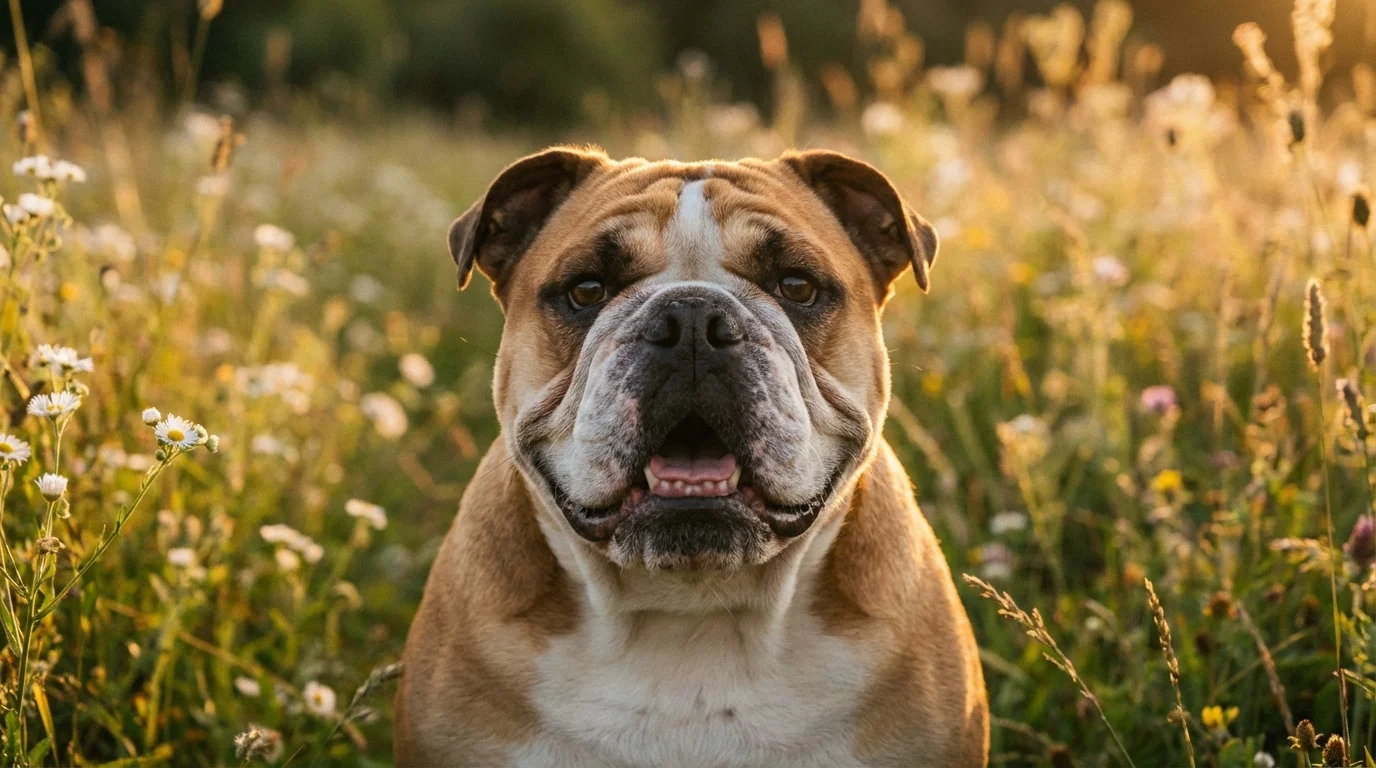
The Bulldog is one of the most recognizable dog breeds on earth. That wrinkled face, those stocky legs, and that signature underbite have made the Bulldog a national symbol of Britain and a mascot for universities, sports teams, and the U.S. Marine Corps. But behind the tough-guy appearance is a gentle, easygoing dog that would rather nap on the couch than pick a fight with anyone.
Rodun ominaisuudet
History & Origin

The Bulldog's history begins in 13th-century England with a blood sport called bull-baiting. Dogs were set upon a tethered bull, and the dog that could grab the bull's nose and pin it to the ground won. The Bulldog was bred specifically for this purpose: low to the ground so the bull's horns would pass overhead, massively strong in the jaw, and with a pushed-back nose that allowed it to breathe while gripping the bull. The breed's loose, wrinkled skin served a practical purpose too, allowing the dog to twist free if the bull shook it.
Bull-baiting was banned in England by the Cruelty to Animals Act of 1835. The ban nearly killed the breed. Without a job, the Bulldog's future depended entirely on people who valued the dog for companionship rather than combat. Dedicated breeders began selecting for temperament, favoring gentle, sociable dogs while maintaining the breed's distinctive physical characteristics.
Bill George, a prominent London dog dealer, is credited with much of the Bulldog's transition from fighting dog to companion. He and other breeders in the 1860s and 1870s systematically bred out aggression while keeping the broad head, undershot jaw, and muscular build. The first Bulldog breed club was formed in 1878, and the breed standard was written in 1886. By the turn of the century, the Bulldog had completed its transformation from a dog that fought bulls to one that would struggle to catch a tennis ball.
The Bulldog became a symbol of British tenacity, particularly during World War II, when Winston Churchill's round face and determined expression drew constant comparisons to the breed. Churchill did not actually own a Bulldog (he preferred Poodles), but the association stuck. In the United States, the Bulldog became the most popular college mascot. Georgetown, Butler, Yale, and dozens of other universities adopted the breed. The AKC registered the Bulldog in 1886, and the breed has remained in the top 10 most popular breeds for years, currently ranking around 6th.
Despite the Winston Churchill association, the wartime prime minister never owned a Bulldog. His pets included a Poodle named Rufus and a marmalade cat named Jock. The Bulldog connection came from cartoonists who saw a resemblance between Churchill's face and the breed.
Appearance
The Bulldog is a medium-sized, heavy-set dog with a thick body and a distinctive, unmistakable face. Males weigh about 50 pounds and females about 40 pounds. Height is 14 to 15 inches at the shoulder. The breed standard calls for a "symmetrical" dog, but the Bulldog's symmetry is all its own: wide, low, and compact with a center of gravity that makes it nearly impossible to knock over.
The head is large and round with a very short, flat muzzle. The lower jaw projects prominently in front of the upper jaw, creating the characteristic undershot bite. The cheeks extend to the sides of the eyes, and the forehead is flat with deep wrinkles and folds. The eyes are round, dark, and set low and wide apart. The ears are small, thin, and set high on the head, folding inward in the "rose ear" pattern. The expression should be kind and dignified.
The body is broad and low with a distinctive roach back (a slight arch that rises behind the shoulders, dips slightly in the middle, and rises again at the hip). The chest is very broad, deep, and full, and the brisket hangs between the front legs. The front legs are short, stout, and set wide apart. The hind legs are longer than the front legs, which contributes to the breed's rolling gait.
The coat is short, flat, and smooth with a fine texture. Colors include red, white, fawn, fallow, and any combination of these with or without brindle, piebald, or ticking. The skin is soft and loose, particularly around the head, neck, and shoulders. The tail is short, either straight or screwed, set low, and carried downward.
The Bulldog's gait is a distinctive loose-jointed, rolling shuffle. It is not built for speed or endurance. The breed moves with a heavy, constrained stride that is unmistakable from a distance.
Temperament & Personality
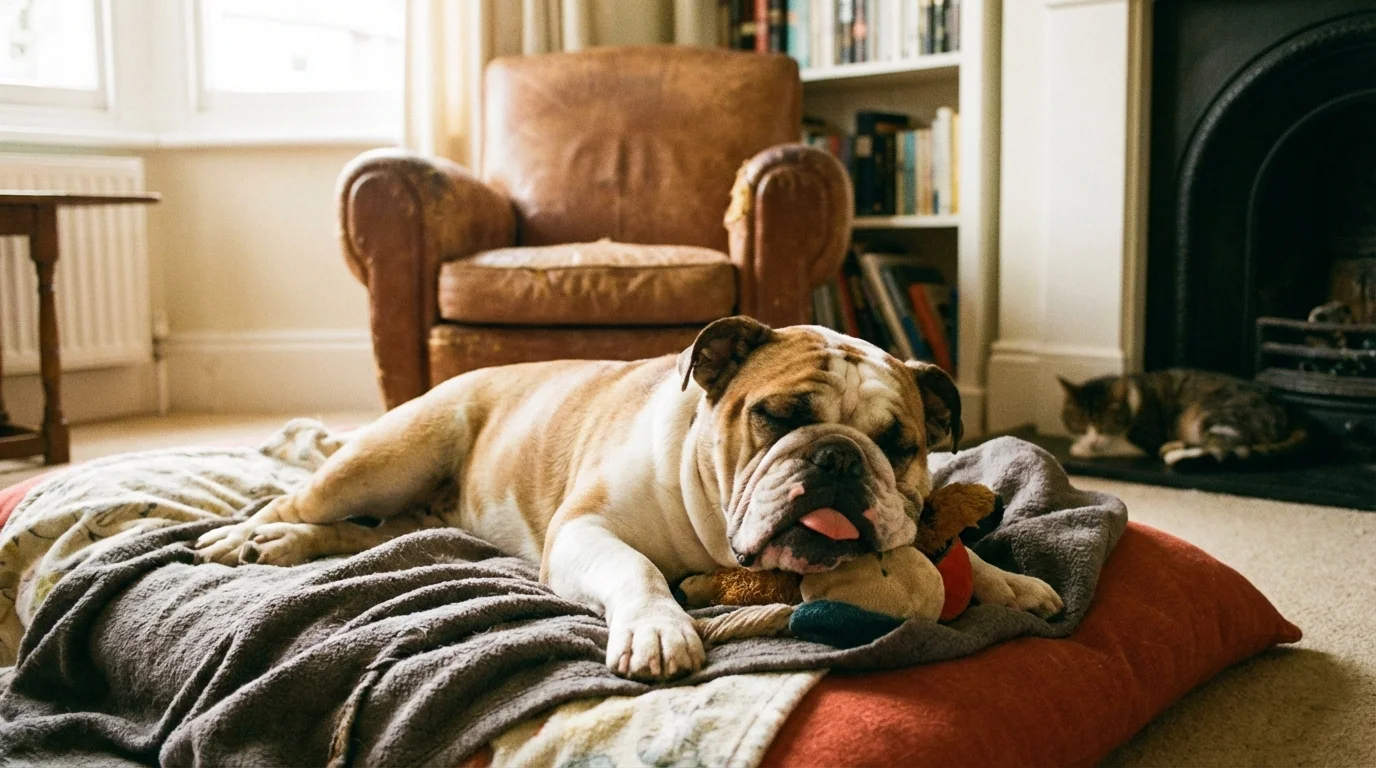
Modern Bulldogs are among the gentlest, most easygoing breeds alive. The aggression that defined their bull-baiting ancestors has been bred out so thoroughly that today's Bulldog is more likely to lick a stranger than bark at one. They are calm, patient, and remarkably tolerant of handling, noise, and chaos.
Bulldogs form strong bonds with their families and are happiest when they are near their people. They are not demanding in the way that a herding breed demands activity, but they want to be in the same room as you, preferably on the same piece of furniture. Many Bulldogs develop a favorite spot on the couch and defend it with the one form of aggression they still possess: the dead weight of a 50-pound dog that refuses to move.
With children, Bulldogs are patient and gentle. Their low energy means they are not going to bowl a toddler over, and their tolerance for being poked, prodded, and climbed on is exceptional. They seem to understand that small children require patience, and they provide it. This makes them one of the better choices for families with young kids who want a dog that is not going to knock the children down in the backyard.
Bulldogs are not watchdogs in any serious sense. They will bark at the doorbell, but their approach to strangers is generally welcoming. Some Bulldogs develop a protective instinct around their family, but this is expressed more as alertness than aggression. Their appearance alone provides a degree of deterrence.
The breed is stubborn. This is not the same thing as being unintelligent. Bulldogs understand what you want; they simply evaluate whether it is worth the effort. If a Bulldog does not want to walk further, it will sit down and become an immovable object. If it does not want to get off the couch, good luck. This stubbornness is part of the breed's character, and owners who fight it end up frustrated. Owners who work with it, using patience and incentives, develop a rewarding partnership.
Training & Exercise
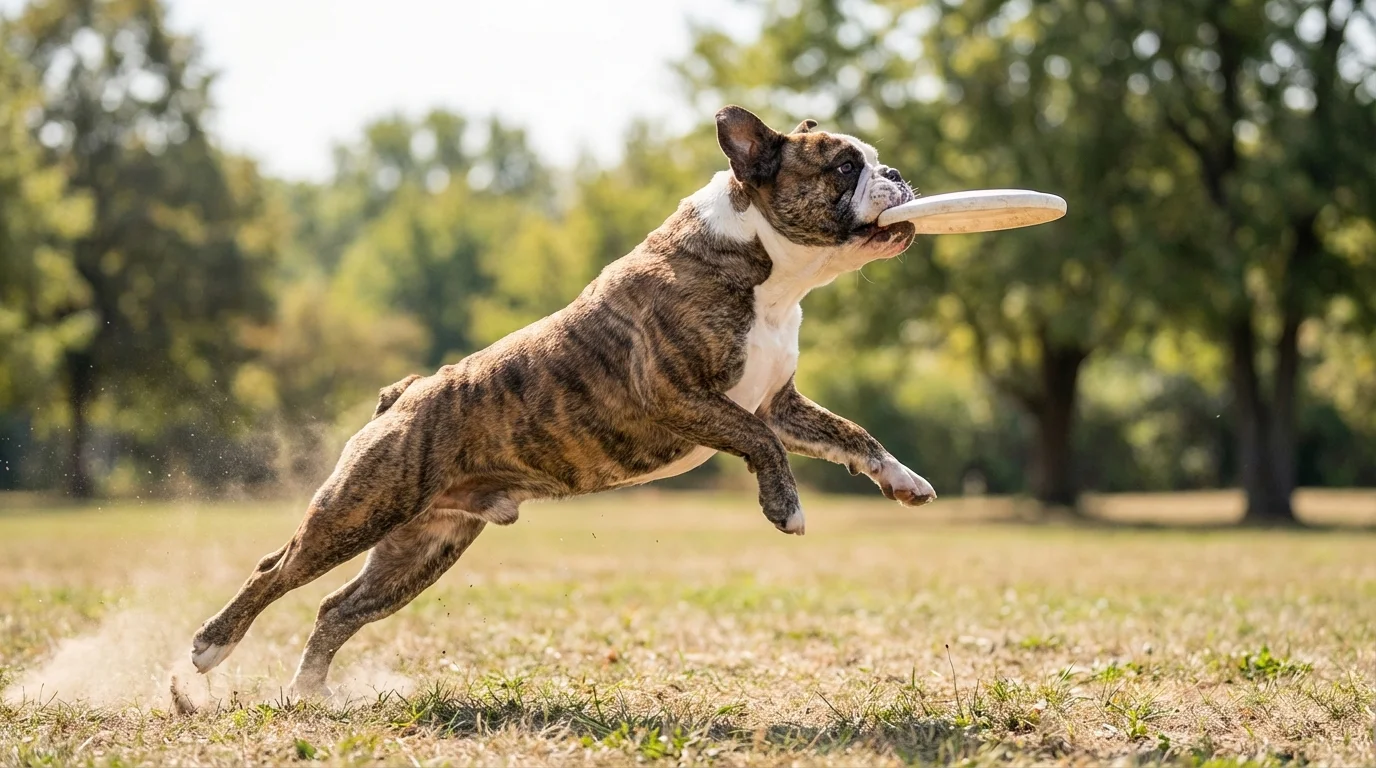
Training a Bulldog requires patience and a good sense of humor. The breed ranks low in obedience trials, not because Bulldogs cannot learn but because they are selective about when they choose to demonstrate what they know. Short, positive, treat-based sessions work best. Bulldogs respond to food rewards better than praise, and they shut down completely under harsh correction. If a training session feels like work, the Bulldog will opt out.
Start basic obedience early. Puppies should learn sit, down, and come by 4 months. Leash manners are important to establish young because a 50-pound Bulldog that decides to plant its feet is hard to move. Socialization is typically easy since Bulldogs are naturally sociable, but exposure to different environments, surfaces, and situations helps prevent the kind of stubbornness that comes from uncertainty.
Housetraining can be slower than average with Bulldogs. Many breeders and trainers report that Bulldogs take longer to reliably housetrain than most breeds. Crate training helps significantly. Be consistent, take the puppy out frequently, and reward success. Do not punish accidents.
Exercise requirements are modest, which is one of the breed's main appeals. Adult Bulldogs need about 20 to 40 minutes of daily exercise, typically split into two short walks. They are not hiking partners, jogging companions, or fetch enthusiasts. A brisk 15-minute walk around the block is often all a Bulldog wants before heading back to the couch.
Heat management is critical during any exercise. Bulldogs are brachycephalic (short-nosed) and overheat dangerously fast. In warm weather, walks should happen only in the cool hours of early morning or late evening. Temperatures above 80 degrees Fahrenheit are risky. Always carry water, watch for heavy panting and labored breathing, and never leave a Bulldog in a car, even with windows cracked. Heatstroke can kill a Bulldog in minutes.
Swimming is off the table for most Bulldogs. Their front-heavy build, short legs, and flat face make swimming extremely difficult and dangerous. Many Bulldogs cannot swim at all and will sink. If you have a pool, fence it off or supervise constantly.
Health & Care
Bulldogs have a shorter lifespan than most breeds, averaging 8 to 10 years. The breed's exaggerated physical features, particularly the flat face, contribute to several chronic health issues that prospective owners need to understand.
Brachycephalic obstructive airway syndrome (BOAS) is the most significant health concern. The Bulldog's shortened skull compresses the airways, causing narrow nostrils, an elongated soft palate, and a narrow trachea. This makes breathing harder, especially in heat or during exertion. Signs include snoring, snorting, gagging, and exercise intolerance. Severe cases benefit from surgical correction, which widens the nostrils and shortens the soft palate. Many veterinary specialists recommend this surgery proactively.
Skin fold infections are common because of the deep wrinkles on the face and body. Moisture and bacteria collect between the folds, causing irritation, redness, and odor. Daily cleaning of facial wrinkles with a damp cloth followed by thorough drying is essential. Some owners use medicated wipes or antifungal powders in problem areas. The tail pocket (the skin fold under a screw tail) requires the same attention.
Hip dysplasia affects Bulldogs at one of the highest rates of any breed. The Orthopedic Foundation for Animals (OFA) reports that over 70% of evaluated Bulldogs show some degree of hip dysplasia. Patellar luxation (dislocating kneecap) and elbow dysplasia are also common. Cherry eye (prolapse of the third eyelid gland) occurs frequently and usually requires surgical correction.
Bulldogs have difficulty regulating body temperature because they cannot pant efficiently. Air conditioning is a necessity, not a luxury. They are also prone to digestive issues and are among the gassiest breeds. A high-quality, easily digestible diet helps but does not eliminate the flatulence entirely.
Reproduction is complicated. Most Bulldog litters are delivered by cesarean section because the puppies' large heads often cannot pass through the birth canal. This adds significant cost to breeding and is one reason Bulldog puppies are expensive.
Grooming is straightforward: brush the coat weekly with a soft-bristle brush, clean wrinkles daily, bathe every 4 to 6 weeks, trim nails every 2 to 3 weeks, and brush teeth several times per week.
Living With a Bulldog
Bulldogs are ideal apartment and house dogs. Their low energy level means they do not need a yard, and their quiet nature means they will not disturb neighbors. They are content with a comfortable spot on the couch, access to their food bowl, and the company of their people. This makes them one of the best breeds for city living and for people who prefer a calm household.
Air conditioning is not optional. Bulldogs cannot tolerate heat, and a climate-controlled home is necessary for their health and safety. In warm climates, limit outdoor time during summer months and always provide shade and water when outside. Many Bulldog owners invest in cooling mats, portable fans, and cooling vests for warmer days.
The breed is not built for outdoor living. Bulldogs should live inside with the family. They cannot handle cold extremes any better than hot ones. Their short coat provides minimal insulation, and they are susceptible to hypothermia in cold weather. A jacket or sweater is helpful for winter walks.
Bulldogs get along well with other pets, including cats and other dogs. They are not confrontational and generally avoid conflict. Some males can be territorial with other males, but this is uncommon in well-socialized dogs. They are one of the easier breeds to introduce to a multi-pet household.
Expect noise, but not barking. Bulldogs snore, sometimes loudly enough to be heard in the next room. They also snort, wheeze, and grunt throughout the day. Some owners find these sounds charming; others find them annoying. If you are a light sleeper, you may want the dog's bed in a separate room.
The financial commitment with Bulldogs is higher than average. Veterinary costs are significant due to the breed's health profile. Budget for potential BOAS surgery ($1,500 to $5,000), regular skin fold care, potential joint treatments, and the general medical attention this breed requires. Pet insurance is a wise investment for Bulldog owners.
First-time dog owners do well with Bulldogs. The breed is forgiving, low-maintenance in terms of exercise, and does not require an experienced hand to manage. The main requirements are attentiveness to the dog's health needs, a climate-controlled home, and the willingness to clean those wrinkles every day.
Söpöimmät Bulldogt Pupvotessa
 #1
#1 #2
#2Lady Jade is a beautiful pitbull who loves belly rubs, going on adventures, and making everyone smile. She's currently in the top 5% and needs your help to reach number one!
3.4K+ ääntä #3
#3Bulldogs are so loving, and a very unique breed of dog ,they require 99.9% of your time day in day out But im not complaining shes is such an amazing addition to my family..
1.5K+ ääntä #4
#4Zheynna es arrivée dans ma vie le 20/10/2015 2 jours avant mon opération de cervicales ( compression de la moille épinière) elle m à toujours rendu heureuse et m à soutenu ,aujourd'hui elle protège ma fille un amour ma Zheynna 🥰
1.2K+ ääntäSuosituimmat Bulldog-nimet Pupvotessa
Lisää Bulldogja Pupvotessa
Usein Kysytyt Kysymykset
Bulldogs are excellent family dogs. They are gentle with children, patient with handling, and calm enough to fit into any household. Their low energy means they will not knock small children over, and their tolerance for noise and chaos makes them well-suited to busy families. The main consideration is the breed's health needs, particularly heat sensitivity and the cost of potential veterinary care.
Bulldogs need only 20 to 40 minutes of exercise per day, split into two short walks. They are not athletic dogs and do not enjoy strenuous activity. Avoid exercise in warm weather entirely, as Bulldogs overheat quickly due to their flat face. Early morning and late evening walks are safest. Most Bulldogs prefer a short walk followed by a long nap on the couch.
Bulldogs shed moderately. Their short, fine coat releases hair year-round, with a slight increase during seasonal changes. Weekly brushing with a soft-bristle brush or rubber grooming mitt keeps shedding manageable. They shed less than double-coated breeds but more than non-shedding breeds like Poodles. The bigger grooming commitment is cleaning their facial wrinkles daily to prevent skin infections.
Bulldogs live 8 to 10 years on average, which is shorter than most breeds. The primary health concerns that affect lifespan include brachycephalic airway syndrome, hip dysplasia, cancer, and heart disease. Choosing a breeder who prioritizes health testing and maintains more moderate physical proportions can improve your dog's chances of a longer, healthier life.
Bulldogs are stubborn, which makes training a test of patience. They learn commands at a moderate pace but decide on their own terms when to obey them. Food-based positive reinforcement works best. Keep sessions short (5 to 10 minutes) and upbeat. Housetraining often takes longer than average. Harsh corrections are counterproductive because Bulldogs will simply shut down and refuse to engage.
Bulldog puppies from reputable breeders cost $2,000 to $4,000, with some reaching $5,000 or more from champion bloodlines. The high price reflects the cost of breeding: most litters require artificial insemination and cesarean delivery. Adopting from a Bulldog rescue costs $300 to $800. Budget for higher-than-average veterinary expenses: $2,000 to $4,000 annually for potential health issues common to the breed.